
Battery trains received their biggest order yet. The world’s first narrow-gauge hydrogen train began testing. Fully driverless metro trains entered passenger service in India. Ireland took another major step towards digital signalling, while plans for a new competitor beneath the English Channel became considerably more real.
October has been a busy month for railways.
At Joshi’s Museum of Miniature Railways, we spend a lot of time looking at the machines and systems that have shaped railway history. But that history is still being written every month.
Here is our roundup of the train news from October 2026 that caught our attention—and why each development matters.
1. Germany Places a Record Order for 113 Battery Trains
One of October’s biggest railway stories came from Germany.
Lower Saxony transport authorities ordered 113 Siemens Mireo Plus B battery-electric trains, along with long-term maintenance and new servicing facilities. Siemens describes it as the world’s largest battery-train order.
The contract is worth more than €2 billion, with an option for another 132 trains. The first vehicles are intended to replace diesel trains on regional routes where complete overhead electrification is unavailable.
Railway electrification traditionally means installing overhead wires or third rails across an entire route.
Battery trains offer another possibility.
They can charge while travelling beneath electrified sections and then continue using stored electrical energy where overhead wires end.
That makes them particularly interesting for regional railway networks where installing kilometres of new electrification infrastructure may be expensive or difficult.
Hydrogen rail also moved forward this month.
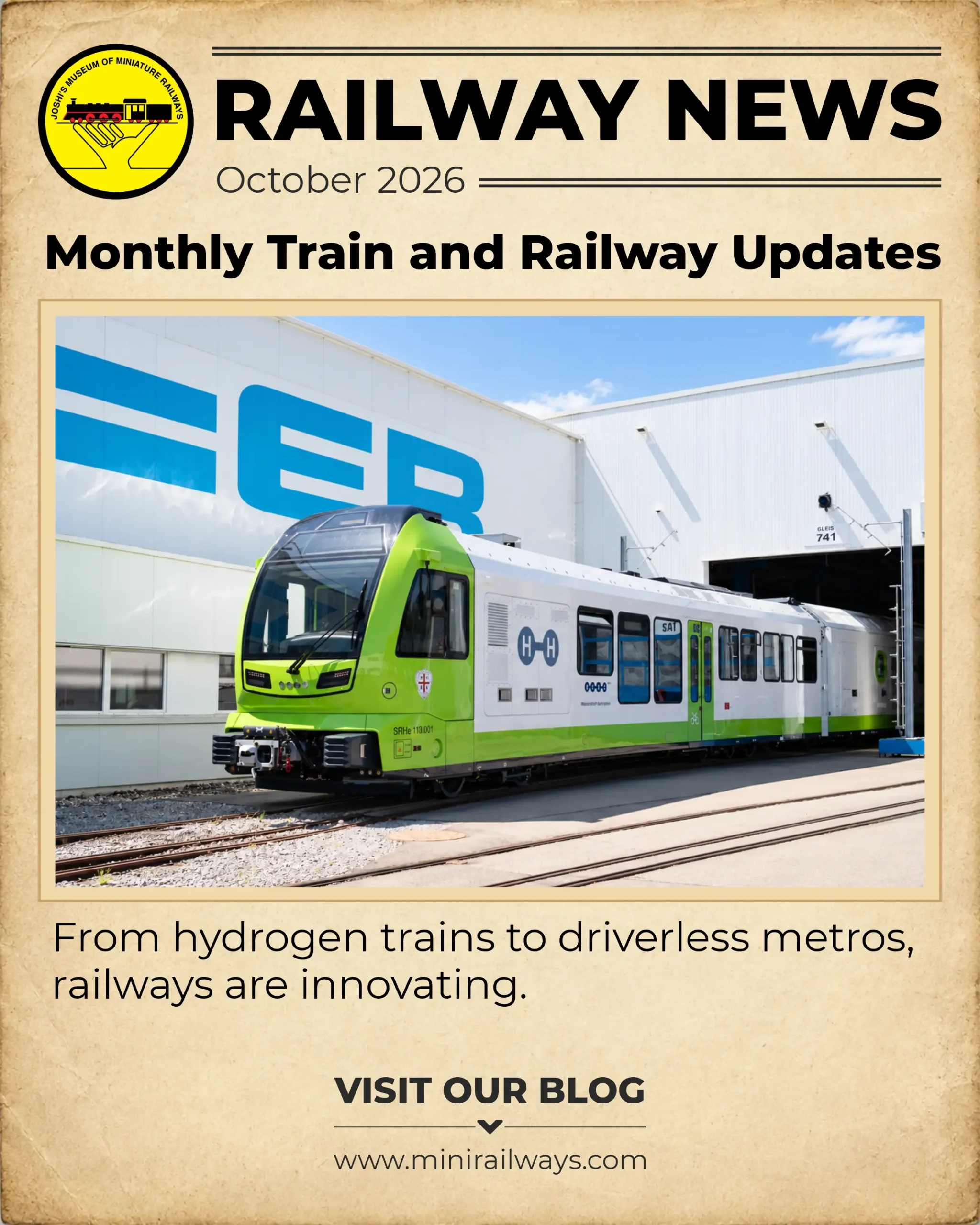
On 16 October, Stadler announced that the world’s first hydrogen-powered train designed specifically for narrow-gauge railways had begun testing in Switzerland.
The train is being built for ARST in Sardinia, Italy, and uses the unusual 950 mm Italian metre gauge.
To test it properly before delivery, Stadler even constructed an almost four-kilometre 950 mm test track between Hemishofen and Ramsen in Switzerland.
Engineers are testing the hydrogen propulsion system, acceleration, braking and performance at different speeds and hydrogen levels.
Hydrogen trains are generally being explored for routes where conventional railway electrification is difficult to justify.
But this project is particularly interesting because the technology is being adapted to narrow-gauge regional railways.
Railways do not operate on one universal track gauge or under one universal set of conditions.
New technology has to adapt to the railway that already exists.
For model railway enthusiasts, that idea sounds familiar: scale, gauge and infrastructure determine what can run where.
India also had a major railway technology milestone in October.
Passenger service began on Chennai Metro Phase II Corridor 4 using Alstom Metropolis trains designed for fully driverless operation.
The trains can operate at speeds of up to 80 km/h, and all 36 trainsets for the corridor have been manufactured in India, with engineering work undertaken in Bengaluru and manufacturing at Sri City.
Another 32 driverless metro trainsets for Chennai are also under production.
Only two days later, Alstom unveiled the first of 39 driverless Metropolis trainsets for Mumbai Metro Lines 4 and 4A, built in just 14 months.
Driverless metro operation is about much more than removing the person from the cab.
It requires trains, signalling, platform systems, control centres and safety systems to communicate continuously.
The interesting railway story is therefore not simply “a train without a driver.”
It is a railway becoming increasingly automated as one integrated system.
For India’s rapidly expanding urban rail networks, October showed that this technology is moving further into everyday passenger service.
Not every major railway upgrade is visible from the platform.
Ireland’s rail network took an important digital step in October when Iarnród Éireann and Alstom signed contracts worth around €95 million to install European Train Control System Level 1, or ETCS Level 1, equipment on up to 176 existing rail vehicles.
ETCS uses onboard equipment to supervise train movement and can intervene when required, including enforcing braking.
Traditional railway signalling tells the driver what is happening ahead.
Modern train-control systems increasingly bring that information—and supervision—directly into the cab.
Across Europe, ETCS is becoming central to the long-term modernisation and standardisation of railway signalling.
It may not look as dramatic as a new locomotive, but signalling technology determines how safely and efficiently trains can use the railway around them.
A train is only as advanced as the system controlling its movement.
A familiar name is planning a return to railways.
On 9 October, Virgin and Alstom announced agreements covering 12 Avelia Stream high-speed trains for Virgin’s proposed cross-Channel railway services.
The trains are intended to support new international services planned from 2030, subject to regulatory approval and financial close.
They will be manufactured at Alstom’s Savigliano facility in Italy and maintained in the United Kingdom.
For decades, passengers travelling by high-speed train through the Channel Tunnel have primarily associated the journey with Eurostar.
Virgin’s proposal represents the possibility of another operator entering this market.
But for railway enthusiasts, the interesting part is also the rolling stock.
The Avelia Stream platform is becoming increasingly important in European high-speed rail, with different versions being developed for different networks and operators.
The same basic railway platform can therefore evolve for very different routes, operating requirements and national systems.
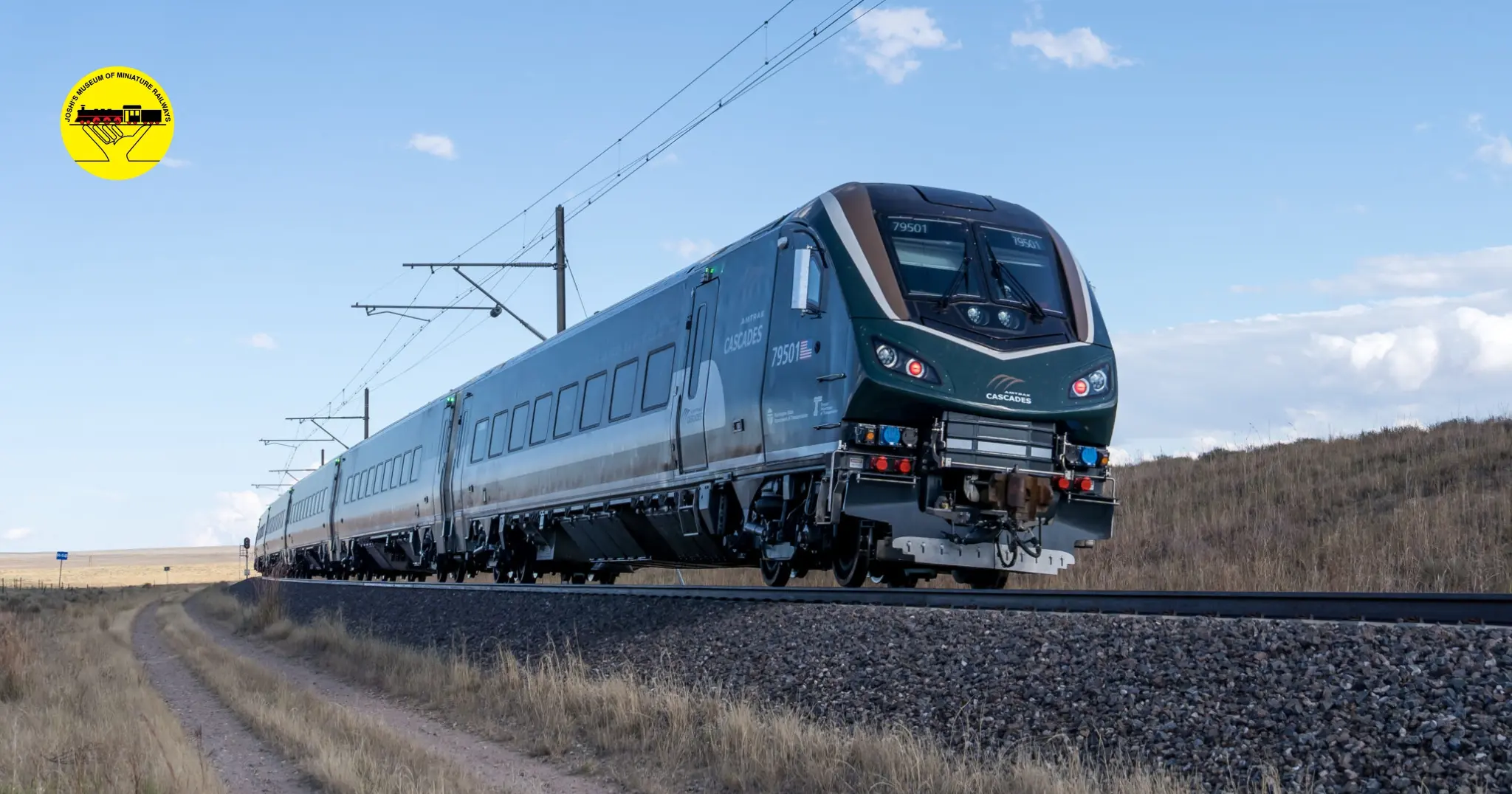
The United States entered October with its new Airo trains already carrying passengers on Amtrak Cascades after their 30 September debut.
Then, on 23 October, Amtrak opened a new $250 million Maintenance and Inspection Facility in Seattle designed specifically to support the new fleet.
The nearly 100,000-square-foot facility contains three tracks and is long enough to accommodate an entire Airo trainset indoors for servicing and maintenance.
It is the first of six major new facilities Amtrak plans to support its modern fleet.
New trains usually receive the attention.
But new trains also require new workshops.
Modern fixed or semi-fixed trainsets are maintained differently from fleets made up of individual coaches that can easily be separated.
That means fleet modernisation often requires the infrastructure behind the train to change as well.
The railway you do not see is just as important as the train you do.
October was not entirely about batteries, hydrogen and digital signalling.
There was good news for steam enthusiasts too.
Union Pacific announced that No. 844 will return to public operation after a six-year absence and reunite with Big Boy No. 4014 for a holiday tour in November.
The two locomotives are scheduled to operate together as a double-header during a fundraising excursion between Greeley and Denver, Colorado.
It will be their first public appearance together since 2019.
Railway progress does not always require forgetting what came before.
No. 844 and Big Boy No. 4014 belong to a completely different era from the battery trains and driverless metros elsewhere in this month’s roundup.
Yet both remain operational pieces of railway history.
That is part of what makes railways unusual.
A technology more than a century old can still run beside the technologies that may define the next century.
What October 2026 Tells Us About the Direction of Railways
Put these stories together and a few themes appear.
Alternative propulsion is scaling up.
Battery trains are being ordered in fleets of more than a hundred vehicles, while hydrogen is moving into specialised applications such as narrow-gauge railways.
Automation is becoming normal urban railway technology.
Driverless trains are no longer futuristic demonstrations; they are entering real passenger service.
Signalling is becoming increasingly digital.
Modern railway development is as much about software and train-control systems as locomotives and coaches.
High-speed rail is attracting new competition.
New operators and new rolling stock could change how international railway routes are served.
From 113 battery trains in Germany and a hydrogen narrow-gauge train in Switzerland to driverless metros in India, digital signalling in Ireland and a possible new cross-Channel high-speed service, October 2026 showed just how many different directions railway technology is developing at once.
There is no single “train of the future.”
Instead, different railways are finding different solutions for the networks they operate.
And behind every headline is something railway enthusiasts have understood for generations:
A railway is never just the locomotive.
It is the track, signalling, power, stations, workshops, control systems and people that allow the entire network to move.
That is also what we celebrate at Joshi’s Museum of Miniature Railways—only at a much smaller scale.
Major developments included Germany’s 113-train battery fleet order, testing of the world’s first narrow-gauge hydrogen train, driverless metro developments in India, Ireland’s ETCS rollout and Virgin’s proposed new cross-Channel high-speed trains.
Siemens Mobility announced an order for 113 Mireo Plus B battery-electric trains for regional rail services in Lower Saxony, Germany.
The first train currently undergoing testing is intended for Sardinia, Italy, where it will operate on ARST’s 950 mm narrow-gauge railway network.
Yes. Driverless-capable Metropolis trains entered passenger service on Chennai Metro Phase II’s Corridor 4 in October 2026, while new driverless trainsets are also being produced for Mumbai.
Virgin and Alstom have signed agreements covering 12 Avelia Stream high-speed trains for proposed cross-Channel services from 2030. The project remains subject to regulatory approval and financial close.