
Train travel in India is not just a way of getting from one city to another. It is waking up to chai calls in a sleeper coach, negotiating who gets the lower berth, checking a PNR repeatedly before a family wedding, buying snacks through station windows, and watching entire landscapes change outside the same train window. For first-time travellers, however, Indian Railways can also feel like its own language. What is 3A? Is RAC confirmed? Why does Tatkal open at a different time? Should you choose Sleeper or 3AC? And how did a railway system this enormous begin in the first place?
At Joshi’s Museum of Miniature Railways, or JMMR, trains are naturally at the centre of what we do. But understanding trains also means understanding the journeys they make possible. This guide breaks down train travel in India, from the history of the first passenger train to today’s railway classes, IRCTC ticket booking, Tatkal reservations, and the little things that make an Indian train journey unlike almost any other.
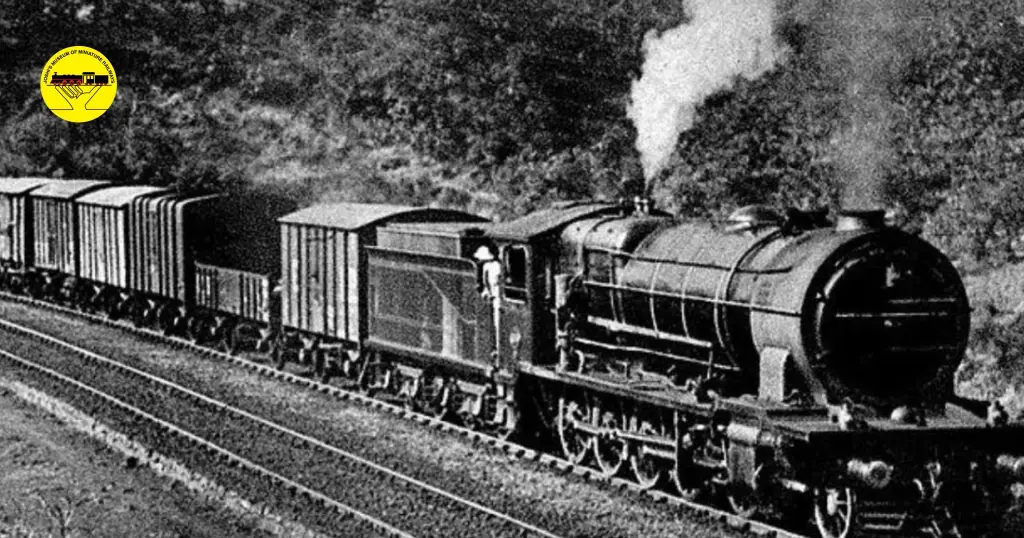
India’s railway story officially began on 16 April 1853, when the first passenger train travelled from Bombay, now Mumbai, to Thane. According to Indian Railways, the train covered approximately 34 kilometres, carried around 400 passengers in 14 coaches, and was hauled by three steam locomotives named Sahib, Sindh and Sultan.
That short journey would eventually transform the country.
Railways connected ports to inland markets, cities to smaller towns, agricultural regions to commercial centres, and eventually families separated by distances that had once taken days or weeks to cross. By 1880, the Indian railway system had already expanded to roughly 9,000 route miles.
The technology changed too. Steam dominated early railway travel, while India’s first electric train ran between Bombay Victoria Terminus and Kurla Harbour on 3 February 1925 using a 1500 V DC system. Dieselisation followed later, and today electric traction dominates much of the network.
Yet the social character of train travel remains remarkably familiar. Indian trains still bring strangers into shared compartments, turn overnight travel into temporary communities, and make stations part of the cultural geography of almost every major town.
One of the most searched questions around train travel in India is simply: Which train class should I book?
Indian Railways uses short codes for different forms of accommodation. Not every train offers every class, so what appears during booking depends on the train and route. Official railway material lists classes ranging from First AC and AC tiers to Sleeper and Second Class accommodation.
Here is the practical version.
| Class | Code | Air-conditioned? | Sleeping berth? | Best for |
| First AC | 1A | Yes | Yes | Maximum privacy and comfort |
| AC 2 Tier | 2A | Yes | Yes | Comfortable overnight travel |
| AC 3 Tier | 3A | Yes | Yes | Popular balance of comfort and price |
| AC 3 Economy | 3E | Yes | Yes | Lower-cost AC overnight travel |
| Sleeper Class | SL | No | Yes | Budget long-distance journeys |
| Executive Chair Car | EC | Yes | No | Premium daytime journeys |
| AC Chair Car | CC | Yes | No | Comfortable intercity travel |
| Second Sitting | 2S | No | No | Shorter budget journeys |
| General / Unreserved | UR | Usually no | No reserved seat | Short journeys and flexible travel |
First AC is the highest traditional accommodation class on Indian Railways. Instead of an open coach arrangement, passengers travel in enclosed cabins or coupes, depending on allocation. Bedding is generally provided on applicable long-distance services.
It is considerably more expensive than other classes, but useful when privacy matters.
2A has two tiers of berths on the side and two main sleeping levels within each bay. Compared with 3A, there are fewer passengers per section and therefore more personal space.
For travellers who want a comfortable overnight train without moving into First AC pricing, 2A is often the sweet spot.
3A is one of the most commonly chosen AC classes for long-distance travel. Three sleeping levels are arranged in the main bay, with side berths along the corridor.
It is busier than 2A but gives travellers air conditioning and a reserved sleeping berth at a more accessible fare.
Sleeper Class follows a broadly similar berth arrangement to 3A but without air conditioning. Windows generally allow more direct connection with the outside landscape, which is part of why many railway enthusiasts still enjoy the experience.
It is also one of the classic forms of train travel in India, especially for budget long-distance journeys.
CC and EC are primarily designed for daytime intercity travel rather than sleeping.
You will commonly encounter these categories on trains such as Shatabdi, Vande Bharat and other premium daytime services. IRCTC’s current catering system separately lists meal arrangements for trains including Vande Bharat, Tejas and Gatimaan services.
From classic steam to modern Indian rail travel, discover how railway design keeps evolving through the models and stories at Joshi’s Museum of Miniature Railways.
For reserved train travel in India, most passengers now use the IRCTC online reservation system.
The basic process is straightforward:
The current Advance Reservation Period is generally 60 days, excluding the date of travel, after Indian Railways reduced it from 120 days with effect from 1 November 2024. Some specific daytime trains continue to have shorter reservation periods.
One passenger on an e-ticket must also carry an accepted original identity document during the journey. IRCTC accepts options including Aadhaar, passport, voter ID, driving licence and several other prescribed photo IDs.
Usually, no.
IRCTC allows passengers to travel using the electronic ticket information or SMS along with valid original identification.
That means the old ritual of printing every railway ticket has largely disappeared.
Booking the train is sometimes only the beginning. Indian Railways reservation status introduces three letters every traveller quickly learns.
| Status | Meaning | Can you travel? |
| CNF | Confirmed | Yes, confirmed seat or berth |
| RAC | Reservation Against Cancellation | Yes, travel permitted, berth arrangements may change |
| WL | Wait List | Depends on final status |
A confirmed ticket is straightforward.
RAC, or Reservation Against Cancellation, allows the passenger to travel even if a full berth is not initially available. As cancellations occur, RAC passengers may move into confirmed berths.
A fully waitlisted e-ticket is different. IRCTC states that if an e-ticket remains fully waitlisted after chart preparation, it is not valid for travel, and the booking amount is automatically processed for refund according to applicable rules.
That is why PNR checking has practically become a pre-journey ritual in India.
Tatkal is Indian Railways’ system for passengers who need to book at shorter notice.
Tatkal reservations generally open one day before the journey date, calculated from the train’s originating station.
Current IRCTC timing is:
Tatkal availability depends on the train and class. IRCTC’s current FAQ states that Tatkal is not offered in First AC and Executive Class.
There is also an important newer rule.
Since 1 July 2025, IRCTC requires the user’s account to be Aadhaar authenticated to book Tatkal and Premium Tatkal tickets online.
Aadhaar-authenticated accounts also have another benefit. IRCTC currently allows users to book up to 24 tickets per month when the user and at least one passenger on the applicable bookings are Aadhaar verified, compared with up to 12 without that verification.
Tatkal is useful, but it is not a guaranteed emergency button. Popular trains can fill within minutes, so planning ahead is still preferable whenever possible.
Already fascinated by Indian trains before the journey even begins? Explore our About page and discover how a passion for railways became Joshi’s Museum of Miniature Railways.
Understanding train travel in India only through classes and reservations misses half the experience.
Stations are worlds of their own.
Some journeys begin at vast terminals like Chhatrapati Shivaji Maharaj Terminus, New Delhi or Howrah. Others begin at tiny stations where one platform, a tea stall and a station board create the entire railway landscape.
Then there are the rhythms that repeat almost everywhere:
The platform announcement.
The sudden rush when a train number appears.
Someone checking the coach position.
Families carrying enough food for twice the journey.
Tea arriving just when everyone had settled.
A child standing at the window trying to identify the locomotive.
The overnight transformation of a sitting compartment into rows of sleeping berths.
Indian train travel is as much a social system as a transport system.
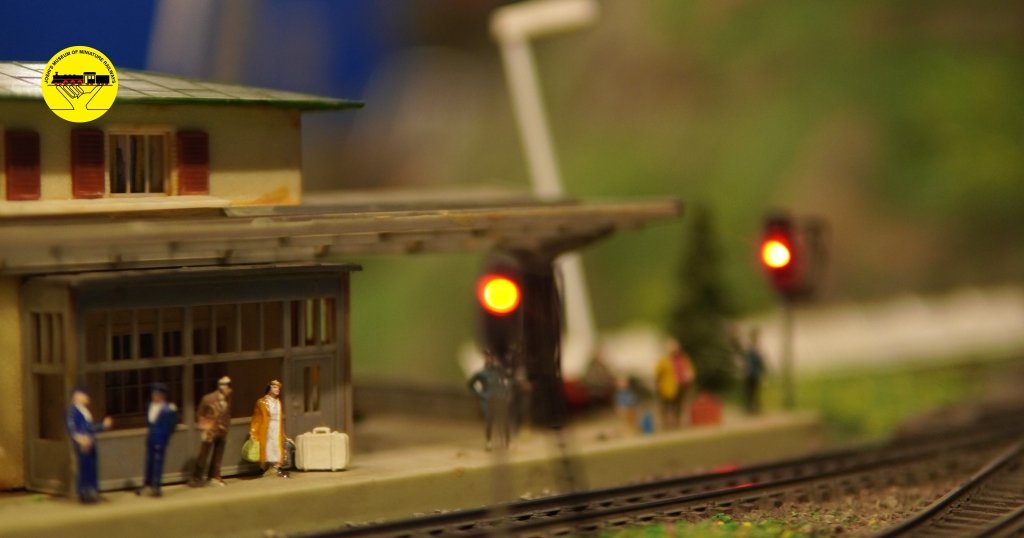
That is part of what makes railways such a rich subject for miniature modelling too. At JMMR, a railway layout would feel incomplete if it contained only locomotives. Stations, signals, roads, scenery and the world surrounding the train are what make the miniature railway feel alive.
If this is your first Indian Railways journey, a few simple habits make things much easier:
Check your train number, not only its name. Similar names and variants can cause confusion.
Confirm the boarding station carefully. Major cities can have several railway terminals.
Check your PNR before travelling. Especially if you booked RAC or waitlist.
Reach the station early. Large stations may involve long platforms, footbridges and coach-position searches.
Carry identification. At least one passenger on an e-ticket must have accepted original ID.
Keep essential items accessible. Water, medication, a charger, tissues and a light snack should not be buried under luggage.
Respect berth timings and shared space. Overnight railway coaches are temporary shared communities. A little cooperation makes the journey better for everyone.
For us at Joshi’s Museum of Miniature Railways, the wonderful thing about train travel is that every journey adds meaning to the miniature.
Once you have stood beside a real signal, you notice miniature signals differently.
Once you have slept in a railway berth, a model passenger coach means more.
Once you understand why stations need points, platforms and signalling, a miniature railway stops looking like a toy and begins looking like a system.
That is why JMMR has always existed at the meeting point of railway nostalgia, engineering and curiosity.
Train travel in India can look complicated from the outside because the system has developed its own vocabulary over more than 170 years. But once you understand the basics, it becomes much simpler.
Choose the class based on how far you are travelling and the comfort you need. Book through IRCTC early where possible. Understand CNF, RAC and waitlist status. Use Tatkal when necessary. And then, once the practical part is over, enjoy what Indian trains have always offered best: the journey itself.
From that first 34 km passenger trip between Bombay and Thane in 1853 to today’s AC coaches, electric locomotives and modern trainsets, Indian railway travel has constantly evolved.
Yet the magic is remarkably unchanged.
There is still a platform.
There is still a departure.
And there is still something special about watching the world begin to move outside a train window.
1. Which train class is best for long-distance travel in India?
3A is a popular balance between price and comfort. 2A provides more space, while Sleeper Class is a more economical non-AC option.
2. How early can I book an Indian Railways ticket?
For most trains, the current Advance Reservation Period is 60 days excluding the journey date. Certain trains may have different limits.
3. Can I travel on an RAC ticket?
Yes. RAC passengers are permitted to travel. Their accommodation may be upgraded to a full berth if cancellations occur.
4. Can I travel if my IRCTC e-ticket is still waitlisted?
A fully waitlisted e-ticket that remains fully waitlisted after chart preparation is not valid for travel.
5. When does Tatkal booking open?
Tatkal generally opens one day before the journey from the train’s originating station, at 10:00 AM for eligible AC classes and 11:00 AM for eligible non-AC classes. Aadhaar authentication of the IRCTC user profile is required for online Tatkal booking.