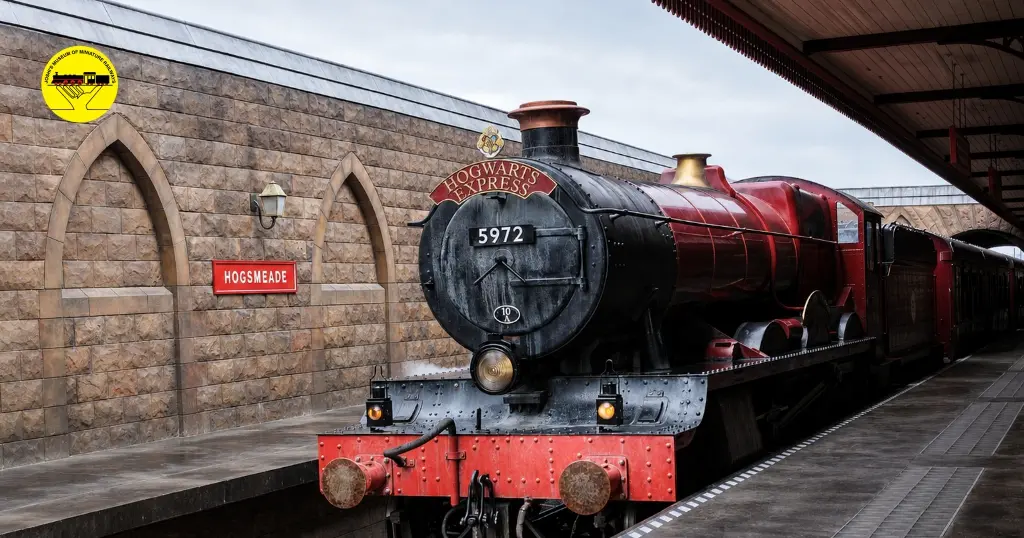

Some trains are remembered for where they go. Some are remembered for how they look. And then there is the Hogwarts Express, a train that became a doorway.
For readers of the Harry Potter series, it was the train that carried students from the ordinary world to Hogwarts School of Witchcraft and Wizardry. For film audiences, it became a red steam engine cutting through mist, mountains, platforms and memory. For railway lovers, it is even more interesting because the screen icon was not born in fantasy. The Hogwarts Express real train was based around an actual British steam locomotive: GWR 4900 Class No. 5972 Olton Hall.
That is what makes the Hogwarts Express such a fascinating piece of pop culture. It is not only a fictional train. It is a material object with a real railway history, a design language, a filming identity and a life beyond the screen.
At Joshi’s Museum of Miniature Railways, trains are also understood as more than machines. They are moving stories. They carry memory, design, engineering and imagination. The Hogwarts Express is one of the best examples of how a train can become a cultural symbol.
In the Harry Potter books, the Hogwarts Express is introduced as the train that takes students from Platform Nine and Three-Quarters at King’s Cross Station to Hogsmeade, the station closest to Hogwarts. It is not described like a technical railway manual. There are no heavy specifications, class diagrams or engineering notes. Instead, the train is described through mood, colour and purpose.
It is a scarlet steam engine. It leaves from a hidden platform. It carries children away from one world and into another.
That is the cleverness of the Hogwarts Express in the books. It is a train, but it is also a threshold. Before Harry reaches the castle, meets the Sorting Hat or understands the scale of the magical world, he boards a train. The train becomes the first full journey into belonging.
This is why the Hogwarts Express feels so important. It is not only transport. It is ritual. Every school year begins with it. Friendships begin on it. Conflicts begin on it. Conversations, sweets, compartments and window views all turn the journey into part of the Hogwarts experience.
At Joshi’s Museum of Miniature Railways, this same idea matters deeply. A railway experience is never only about the engine. It is about the route, the waiting, the movement and the world the train belongs to.
When the Harry Potter books became films, the Hogwarts Express had to become visible. It could no longer remain only in the reader’s imagination. The filmmakers needed a train that looked old enough, magical enough and British enough to feel believable.
A modern train would not have worked. The Hogwarts Express needed smoke, metal, compartments, windows, a whistle and a sense of ceremony. It needed to look like something that could exist in the real world and still feel slightly impossible.
That is where steam power mattered. Steam trains already carry a certain drama. They do not simply move. They breathe, hiss, glow, smoke and arrive with presence. On screen, that presence becomes cinematic.
The film version of the Hogwarts Express did not need to explain itself. The moment audiences saw the red locomotive at the platform, they understood. This was not just a way to reach school. This was part of the magic.
The locomotive used as the Hogwarts Express in the films was GWR 4900 Class No. 5972 Olton Hall. It was built in 1937 at Swindon Works for the Great Western Railway. In real railway terms, it belonged to the Hall Class, a family of 4-6-0 steam locomotives designed for mixed-traffic use.
That detail is interesting because the film renamed the engine “Hogwarts Castle.” In Great Western Railway naming culture, “Hall” and “Castle” were different locomotive classes. The real engine was Olton Hall, but its screen identity became Hogwarts Castle. That change itself became part of the train’s pop culture afterlife.
For the films, Olton Hall was given the visual language of the wizarding world. Its red colour, Hogwarts Express headboard, school crest and altered nameplates made it instantly recognisable. But underneath the fantasy was a real preserved steam locomotive with decades of history before Harry Potter.
That is what makes the Hogwarts Express real train so special. It is both railway heritage and film object. It belongs to engineering history and screen memory at the same time.
The filmmakers needed a locomotive that felt timeless. Olton Hall worked because it had the classic shape audiences associate with British steam travel: a strong front profile, a tender behind the engine, a tall chimney, large driving wheels and a carriage formation that felt like a proper school train.
It also had scale. The Hogwarts Express could not look like a toy or a small branch-line novelty. It needed to feel grand enough to carry generations of students to a magical school. Olton Hall gave the films that weight.
The red livery helped complete the transformation. In everyday railway heritage, colour often tells you about a company, region or era. In the film, colour became emotion. Red made the train feel bold, warm, theatrical and instantly readable. It stood out against dark platforms, Scottish landscapes and the misty atmosphere of the wizarding world.
At Joshi’s Museum of Miniature Railways, this is a useful way to understand railway storytelling. A train’s identity is built through many details: colour, sound, route, scale, timing and setting. Change those details, and the same machine can carry a completely different meaning.
The Hogwarts Express is not remembered only because of the locomotive. It is remembered because of where the films placed it.
The most famous exterior images are connected with the Scottish Highlands, especially the Glenfinnan Viaduct. The sight of a steam train crossing that sweeping curve became one of the defining images of the Harry Potter films. It gave the journey a sense of scale, distance and wonder.
The viaduct did something important for the train’s identity. It made the Hogwarts Express feel like it was travelling into another world. The landscape became part of the story. Mountains, water, bridges and steam worked together to make the train feel larger than the scene itself.
This is why trains work so well in cinema. A train does not sit still. It changes the frame. It moves through landscapes. It brings the audience from one place to another without needing too much explanation.
A miniature railway world uses the same principle in a smaller form. At Joshi’s Museum of Miniature Railways, trains move through stations, signals, bridges and scenes. The scale is different, but the storytelling idea is similar: a train becomes memorable when it belongs to a world.
The Hogwarts Express is also powerful because of the platform. Platform Nine and Three-Quarters is one of the most famous fictional railway spaces in modern literature and film. It turns an ordinary railway station into a hidden passage.
This is material culture at work. A platform, a trolley, a sign, a steam engine and a compartment are all ordinary railway objects. But within the story, they become magical objects. They are remembered because they carry meaning beyond function.
The trolley is not just luggage. The platform is not just infrastructure. The train is not just transport. Together, they create the ritual of departure.
That is why fans visit filming locations, take photos with platform signs and remember the train so strongly. The objects have become touchpoints. They allow people to feel close to a fictional world through real things.
At Joshi’s Museum of Miniature Railways, this idea is very familiar. Miniature railway details also become meaningful because they invite observation. A signal, station, bridge or moving train is small in size, but it can create a large emotional response.
The original Hogwarts Express locomotive from the films is now strongly associated with Warner Bros. Studio Tour London, where visitors can see the train as part of the Platform Nine and Three-Quarters experience. This is important because it gives the train a second life.
Earlier, Olton Hall was a working steam locomotive and later a preserved railway engine. Then it became a film star. Now, it is also a museum object and fan destination.
That journey is unusual. Most film props are built for screen use and later stored, auctioned or recreated. The Hogwarts Express is different because it connects to a real locomotive. It has industrial history, restoration history, cinema history and visitor experience value.
This is what makes the Hogwarts Express real train such a strong example of how objects become icons. It did not become famous only because it appeared in a film. It became famous because the film gave an existing machine a new symbolic life.
The Hogwarts Express is also remembered from the inside. The compartments matter. They are where students meet, talk, argue, buy sweets, look out of windows and begin the school year before reaching the castle.
The compartment format is important because it makes the train intimate. A railway carriage becomes a moving room. It gives characters time to speak and form bonds. In the Harry Potter stories, the train is often where relationships begin to take shape before the larger school plot unfolds.
This is another reason the Hogwarts Express became iconic. It is not only visually memorable from outside. It is narratively useful from inside.
A train is perfect for storytelling because it places characters together in motion. They are going somewhere, but they are also temporarily contained. That creates conversation, suspense and discovery.
Joshi’s Museum of Miniature Railways also shows how trains create stories through movement. Even without film dialogue, a moving train suggests a journey. Viewers naturally begin to follow it, wonder where it is going and notice what happens along the way.
Steam trains carry a natural sense of theatre. They have smoke, sound, shine and rhythm. They are mechanical, but they feel alive. That is why cinema returns to them again and again.
For the Hogwarts Express, steam power helped create the feeling of an older world. Hogwarts is not futuristic. It is candlelit, stone-walled, handwritten and full of tradition. A steam train fits that world perfectly. It feels old, but not dead. It feels historical, but still full of movement.
The Hogwarts Express also works because trains are already linked with childhood imagination. Toy trains, model railways, station visits and first journeys all give trains emotional weight. The Harry Potter series used that existing emotional language and made it magical.
At Joshi’s Museum of Miniature Railways, the charm of railway movement is also built on this emotional language. Trains fascinate people because they are machines with personality. They follow rules, routes and signals, but they also create wonder.
The Hogwarts Express teaches us that trains are never only machines. They are settings, symbols and storytellers.
In the books, the train marks the beginning of the school year. In the films, it gives the magical world a visual identity. In real life, 5972 Olton Hall connects steam railway history with modern fan culture. As a visitor attraction, the train continues to create memories long after the final film was released.
That is why the Hogwarts Express still matters. It gave audiences a journey they wanted to take again and again.
At Joshi’s Museum of Miniature Railways, the same idea appears in miniature form. A train becomes memorable when it moves with purpose, belongs to a detailed world and gives people something to follow. Whether full-size or miniature, real or fictional, a train becomes iconic when it carries imagination.
The Hogwarts Express began as a fictional train on the page, but its screen identity was shaped by a real steam locomotive with a long railway life. GWR 4900 Class No. 5972 Olton Hall gave the films the weight, character and visual drama they needed. Painted red and renamed for the wizarding world, it became one of the most recognisable trains in modern cinema.
Its magic comes from the meeting of two worlds: railway heritage and storytelling.
That is why the Hogwarts Express remains such a strong cultural object. It is a train children remember, adults recognise and railway lovers can study. It proves that trains can be practical, historical, cinematic and emotional at the same time.
And for anyone who loves the idea of trains carrying stories, Joshi’s Museum of Miniature Railways offers that feeling in its own way: through moving trains, detailed scenes and a miniature railway world that continues to spark curiosity across generations.
The Hogwarts Express real train used in the Harry Potter films is associated with GWR 4900 Class No. 5972 Olton Hall, a British steam locomotive built in 1937.
The real locomotive was named Olton Hall. For the films, it appeared with the name Hogwarts Castle as part of its screen identity.
Hogwarts Express scenes were filmed at locations including King’s Cross Station and the Scottish Highlands, with the Glenfinnan Viaduct becoming one of the most famous exterior railway images from the films.
In the books and official wizarding world material, the Hogwarts Express is described as a scarlet steam engine that takes students from Platform Nine and Three-Quarters to Hogwarts.
The original Hogwarts Express locomotive from the films is associated with Warner Bros. Studio Tour London, where visitors can experience the Platform Nine and Three-Quarters set.
A steam train suited the world of Harry Potter because it felt traditional, atmospheric and cinematic. Smoke, sound, compartments and classic railway design helped make the journey to Hogwarts feel magical.
Families can visit Joshi’s Museum of Miniature Railways in Pune to experience moving miniature trains, railway scenes, lights, signals and a detailed miniature world.