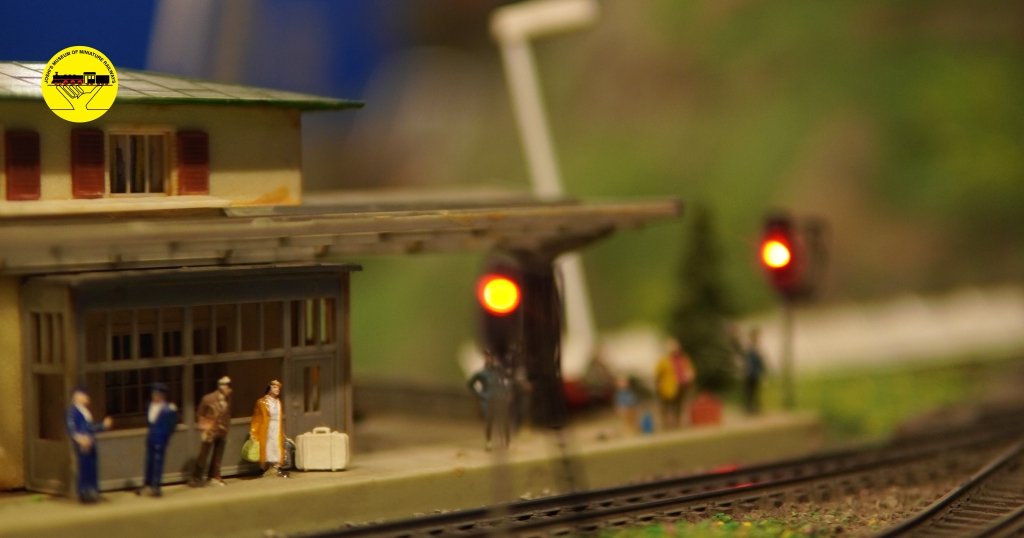

Miniature city engineering can make ideas like railway signals, urban planning and systems design much easier to understand because instead of explaining them as abstract concepts, it puts the entire system in front of you at once. At Joshi’s Museum of Miniature Railways, or JMMR, that is exactly what happens. A child may first notice a train moving through the layout, but look a little longer and another world begins to appear: signals controlling routes, tracks negotiating space, roads meeting railways, stations serving settlements, lights responding to sequences and dozens of individual actions working together as one system.
Our Pune layout includes railway signals, along with tracks, flyovers, lamp posts, roads and other elements arranged as a functioning miniature environment. Beneath it is the less visible layer of control, wiring and engineering that coordinates what visitors eventually see. For students, parents and engineering enthusiasts, this makes JMMR something more interesting than a collection of miniature trains. It becomes a room-sized demonstration of how infrastructure works.
When we think of railways, locomotives naturally get most of the attention. Real railway engineers cannot think that way.
A train depends on track. Track depends on route planning. Routes depend on points and junctions. Multiple trains require signals. Stations need platforms of adequate length. Roads crossing tracks need protection. Electrical systems need power and controls. And all of these systems must work without creating unsafe conflicts.
That is the first big idea a miniature railway city teaches particularly well: systems thinking.
Engineering students use systems thinking to understand how separate components influence one another. A miniature city does the same visually. Move one track, and a road may need to move. Add another platform, and a building may lose space. Introduce another train, and signalling becomes more important.
Nothing exists completely independently.
At JMMR, visitors get to see that relationship without first having to understand the terminology. The city itself becomes the diagram.
Signals are particularly useful for teaching children because the basic idea is familiar. Red, yellow and green already mean something to anyone who has seen road traffic.
But railway signalling goes much deeper.
Railways traditionally divide tracks into protected sections or blocks. The basic principle is simple: trains need enough separation that one train does not enter an unsafe section occupied by another. Network Rail describes traditional signalling in very similar terms, with tracks divided into signal blocks and trackside signals helping drivers maintain safe separation and stopping distance.
Indian Railways takes this considerably further through signalling plans, points, interlocking, overlaps, block working and route control. Official Indian Railways engineering documentation notes that a Signalling Interlocking Plan contains information such as signal positions, point operation, inter-signal distances, overlaps, line capacities and block-working arrangements.
That sounds very technical until you shrink it.
Imagine two miniature trains approaching the same junction.
One needs to go left.
One needs to continue straight.
Now ask a child:
Can both go at once?
Suddenly the reason for signals, points and route control becomes obvious.
| What children see | What engineers see |
| Red, yellow and green lights | Movement authority and signalling logic |
| A train stopping | Safe separation |
| Tracks changing direction | Points and route setting |
| Two trains using one junction | Conflict management |
| A train waiting for another | Capacity and scheduling |
| A signal changing before movement | Coordinated control |
This is why a signal is much more than a colourful accessory on a miniature layout. It introduces the idea that movement needs rules.
One of the most interesting concepts in railway engineering is interlocking.
In simple terms, an interlocking system prevents conflicting railway movements from being authorised simultaneously. Indian Railways uses everything from older mechanical and relay-based systems to electronic interlocking and computer-based control. Official railway documentation describes modern solid-state interlocking as using microprocessors and software programming, reducing relay dependence and allowing greater flexibility.
The important educational lesson is beautifully simple:
Engineering is not only about making something happen.
It is often about making sure the wrong thing cannot happen.
That idea appears everywhere beyond railways: elevators, factory machinery, traffic management, electrical systems, aviation and computer security all use versions of this logic.
A miniature railway provides a surprisingly intuitive first introduction.
Then comes another layer: planning.
Suppose you are given a table and asked to build a miniature city.
Where should the station go?
Where does the railway turn?
How wide can the curve be?
Should the road go over the railway or beneath it?
Where should houses sit?
How does a train disappear behind a hill and emerge somewhere that still makes geographical sense?
These are miniature versions of real planning problems.
Railway planning has always been shaped by geography, land availability, gradients, curves, settlements and expected traffic. A modeller faces the same categories of constraints, only at a much smaller scale.
At JMMR, the challenge becomes even more interesting because an enormous imagined world has to exist inside a finite room. This requires selective compression, where distances are shortened and landscapes simplified while preserving the impression of a much larger network. Our own guide to building miniature railways explains how scale, track planning, scenery and control systems work together when shrinking a railway into a limited space.
Miniature cities also make mathematics surprisingly tangible.
If a locomotive is built to a particular scale, everything surrounding it has to make visual sense at that scale. Platforms, people, trees, cars, signals and buildings cannot simply be chosen randomly.
For example, HO scale is commonly around 1:87. At that ratio, approximately 87 metres in the real world becomes 1 metre in miniature.
Suddenly ratios are no longer a textbook exercise.
They answer practical questions:
This is why miniature modelling naturally brings mathematics, design and engineering together.
Perhaps the most useful educational part of JMMR is the part most visitors never notice.
Our earlier layout relied on roughly five kilometres of wiring, with individual actions connected back toward the control system. The later computer-based system shifted much of that control to networked cards placed closer to different actions, reducing the wiring requirement to around 1 to 1.5 kilometres and simplifying fault-finding and maintenance.
That evolution introduces another important engineering idea: distributed control.
Instead of sending every connection individually over a long distance, control can be placed closer to where an action happens and coordinated through a network.
It is a miniature example of a much larger engineering principle used in industrial automation, buildings, transport systems and computer networks.
The visitor sees a light turn on.
The engineer sees a command moving through a system.
At Joshi’s Museum of Miniature Railways, we have always found that trains naturally generate questions.
How does it move?
Why did it stop?
How does the signal know when to change?
Why is that bridge there?
Who decides where the track goes?
That is exactly where STEAM learning, Science, Technology, Engineering, Arts and Mathematics, becomes powerful.
Our miniature city brings several disciplines together at once:
JMMR’s educational work has already used model trains, paper modelling and railway science to encourage this kind of curiosity among younger visitors.
The important part is that children do not experience these subjects separately. They see them cooperating.
Just like a real city.
Planning a school trip or family learning day? Book your JMMR Pune visit and let children discover engineering by watching it work.
Our miniature railway story also extends beyond Pune. At our Wai Museum, families encounter another JMMR railway experience designed around the same fascination with miniature movement, landscapes and storytelling.
Seeing different layouts is educational in itself. There is no single correct way to shrink a railway. Different spaces require different decisions about route, scenery, show duration and control.
That is perhaps the most important engineering lesson of all:
Design is always a response to constraints.
Travelling towards Wai? Explore our Wai Museum and discover another way we bring miniature railway worlds to life.
A miniature city may look like play, but look carefully and you will find some remarkably serious ideas inside it.
A signal teaches that movement requires rules.
A junction teaches that routes can conflict.
A track plan teaches that space is limited.
A scale model teaches proportion.
A control system teaches coordination.
A whole miniature city teaches that no system exists alone.
That is why Joshi’s Museum of Miniature Railways continues to matter as more than an attraction. At JMMR, we can take concepts that normally belong inside railway manuals, engineering classrooms and planning diagrams and make them visible in one moving world.
Children may walk in because they love trains.
But somewhere between the first signal changing and the next train leaving the station, they may also begin learning how engineers think.