
What does it take in building miniature railways? How do you turn a full sized railway network into something that fits inside a spare bedroom, office or garage, yet still feels real?
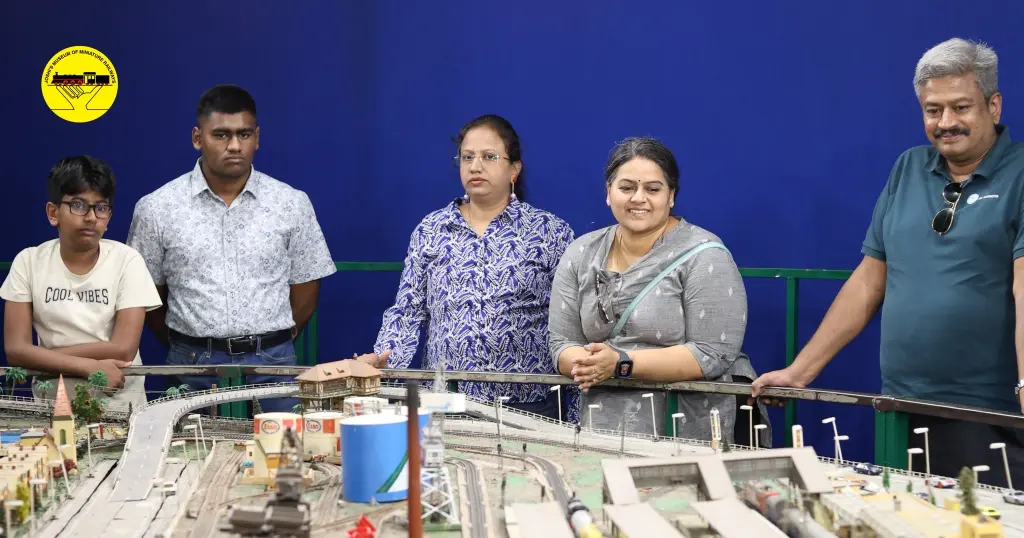
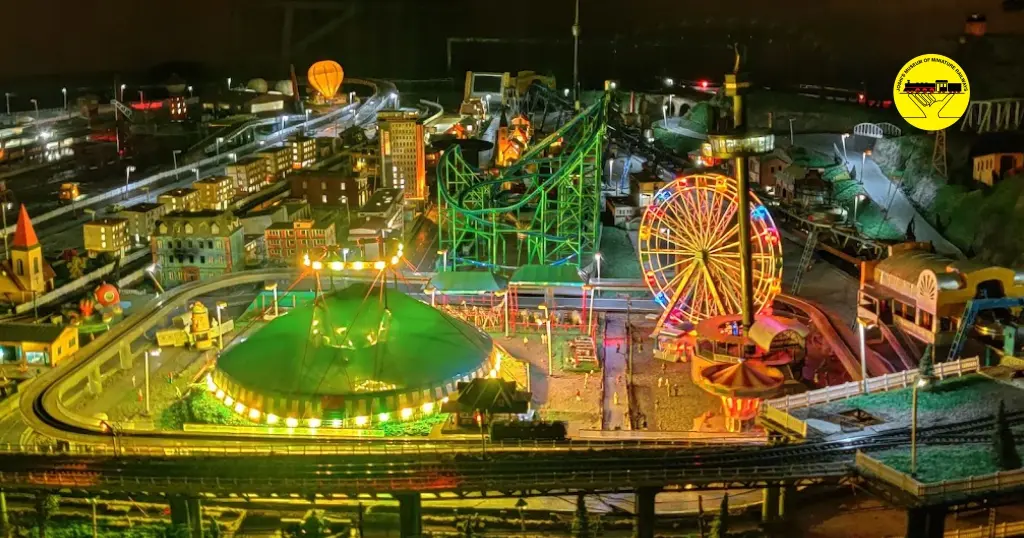
For anyone searching how to build their own miniature railway, Joshi’s Museum of Miniature Railways in Pune is a living example of what is possible. Its permanent layout fills a hall in Kothrud with a complete working city, dozens of trains and around 65 signals, lamp posts and flyovers, all controlled manually or by computer.
This article breaks down the science and planning behind that kind of magic, so you can start shrinking your own railway into a room.
Do check out the accessories and miniature models in our JMMR shop!
In model railways, “scale” means the ratio between the model and the real train. Get this wrong and everything else will feel off.
The most popular model railway scale in the world is HO scale. HO is 1:87, which means 1 unit on the model equals 87 units in real life. The standard gauge track for HO is 16.5 millimetres wide.
Other common scales:
Choosing the right scale is the first scientific decision. It affects:
At Joshi’s Museum, different scales are used for different scenes, including garden style G scale for special training models built for Konkan Railway, and smaller scales for the main city layout.
Before buying a single locomotive, measure your available space. A typical 10 by 12 foot room with a door and a window might give you:
For HO scale, that 10 by 12 foot room can comfortably host a continuous loop with some sidings and a small station. For N scale, the same room can hold a multi level mainline with long runs and complex yards.
The science of scale here is “selective compression”. You cannot model every kilometre of a real railway line, so you pick key scenes:
Joshi’s Museum does this at a professional level. Its permanent layout creates a whole city with only a few square metres of baseboard, yet it suggests suburbs, industry, hills, an airport and multiple stations using clever compression and scene breaks.
Once you know your room size and scale, the next step is a track plan. Think about how you want trains to behave:
Use graph paper or free layout planning software, drawing in your room walls first. For realism, avoid curves that are too tight. Manufacturers often recommend minimum curve radii for each scale. In HO, broader curves look better and allow longer coaches without overhang.
Joshi’s layout is a good mental model. It uses:
Seeing how all that fits in one hall gives visitors a real sense of how to think in layers when planning their own room sized layout.
Even a small home layout is an electrical project. At its core you need:
Traditional layouts use simple DC control where voltage and polarity decide speed and direction. Modern layouts use digital command control (DCC) and similar systems that let you control multiple locomotives independently on the same track.
At Joshi’s Museum, you can see the extreme end of this idea. The original layout used around five kilometres of wiring from the control panel to hundreds of action points. Later, this was redesigned with a computer based system and networked control cards, reducing wiring to about 1 to 1.5 kilometres and making fault finding easier.
For a home builder, that story is important. It shows:
Even a small layout benefits from simple block control and separate circuits for track and accessories.
Shrinking a railway into a room is not only about trains. Scenery is what sells the illusion of distance and place.
Basic steps:
Forced perspective is a classic trick. Use slightly smaller scale buildings or trees at the back of the layout, and larger ones in front. That way, the eye reads more depth than the room really has.
Joshi’s Museum excels at this. Roads narrow into the distance, building sizes and light intensity change as they recede, and background scenes are painted or printed to extend the horizon. These tricks are pure “science of seeing” and can be copied at home on a smaller scale.
Model railroading is not a one weekend project. It is a long term hobby that rewards patience.
The global model train market is growing steadily, with estimates suggesting it could reach around 12 billion US dollars by 2033, driven by hobbyists, collectors and educational uses.
Why do so many people invest their time and money here?
Joshi’s Museum was founded precisely to promote this hobby among young people and to link it with real science and engineering. When you walk through the hall and watch the show, you are not just seeing entertainment. You are seeing the end result of careful scale choices, track planning, wiring, programming and scenic work that any serious home modeller can learn from.
If you are planning your own room sized layout, Joshi’s Museum of Miniature Railways is more than a tourist stop. It is a full scale example of what happens when the science of scale is pushed to its limits.
You can:
The museum’s mission is to be a keeper of this knowledge, inspiring the next generation of model railway builders in India.
Shrinking a railway into a room is part maths, part engineering and part theatre. With the right understanding of scale and a little guidance from places like Joshi’s Museum, anyone can begin turning an empty space at home into a living, breathing world on rails.
Shrinking a full railway into a room is not magic, it is a series of clear, practical decisions. You choose the right scale, plan your track, wire your layout, and slowly build scenery that tricks the eye into seeing distance and depth where there is only a few feet of wood and foam.
A visit to Joshi’s Museum of Miniature Railways shows what happens when these decisions are made well over many years. Their layout proves that anyone with patience, curiosity and a bit of guidance can turn a spare room into a living railway world. Start small, learn the science of scale, and let your own miniature layout grow one track section at a time.
1. What is the best scale for a small room layout?
For most beginners, HO scale works well in an average bedroom or study. If your space is very tight or you want long mainline runs, N scale is better because it is roughly half the size and lets you fit more railway into the same area.
2. How much space do I need to start a miniature railway?
You can start with as little as a 6 by 4 foot table for a basic loop in HO scale. A 10 by 12 foot room gives you enough space for an L shaped or around the walls layout with stations, sidings and scenery that feels like a complete world.
3. How much does it cost to build a small layout?
Costs vary, but a simple starter layout with one or two trains, basic track and minimal scenery can begin in a few thousand rupees. As you add more locomotives, digital control, buildings and details, it becomes a long term hobby investment rather than a one time purchase.
4. Do I need advanced electrical knowledge to wire my layout?
You do not need to be an engineer to wire a small layout. Basic DC control uses only a power pack, two wires to the track and a few extra feeds. As you grow into block control or digital systems, you can learn step by step. Joshi’s Museum is a good place to see how larger systems are planned and maintained.
5. How can Joshi’s Museum help me plan my own miniature railway?
Joshi’s Museum of Miniature Railways acts as a real life classroom. By watching how their trains move, how scenes are compressed and how lighting changes mood, you can pick up ideas for your own plan. Use the museum as a reference for track planning, scenery composition and long term layout reliability.