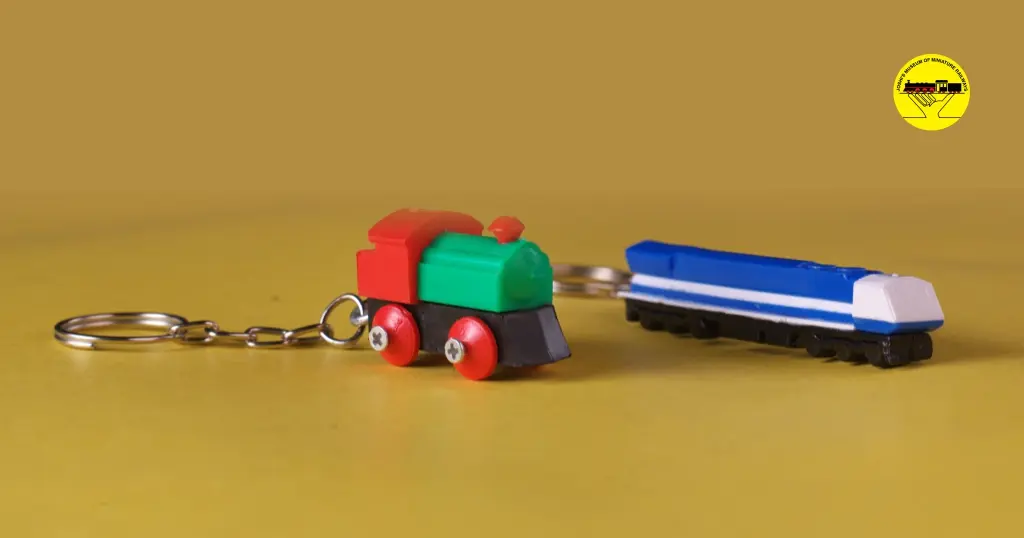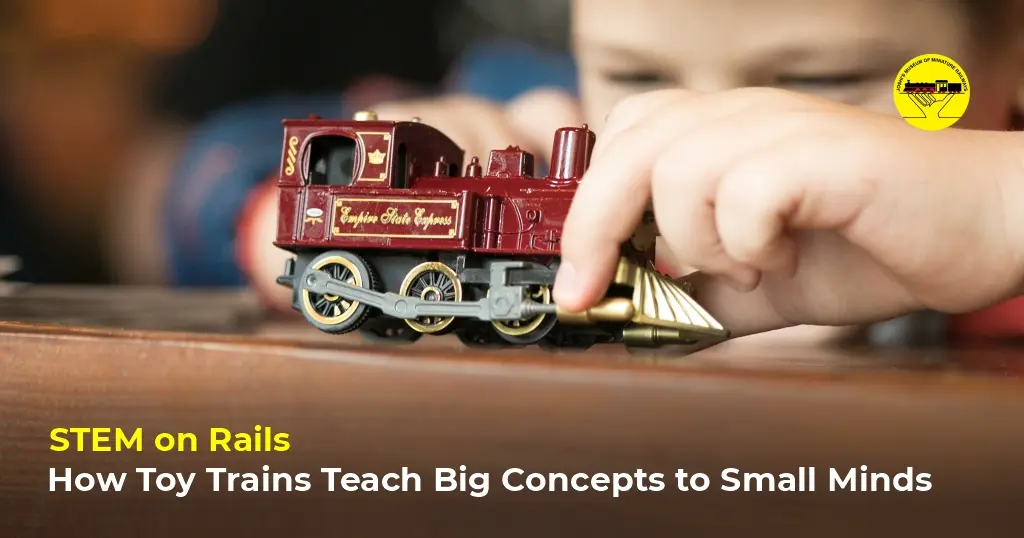
Put a toy train in front of a child, and magic happens. The wheels start to roll, eyes widen, and suddenly the room is filled with questions: Why does it move? How does it stay on track? Can I make it go faster?
What seems like play is, in fact, an introduction to STEM—Science, Technology, Engineering, and Mathematics. From balance and motion to energy and design, trains have been teaching children fundamental concepts for more than a century. And when those trains appear in miniature museums, surrounded by bridges, tunnels, and towns, the learning multiplies.
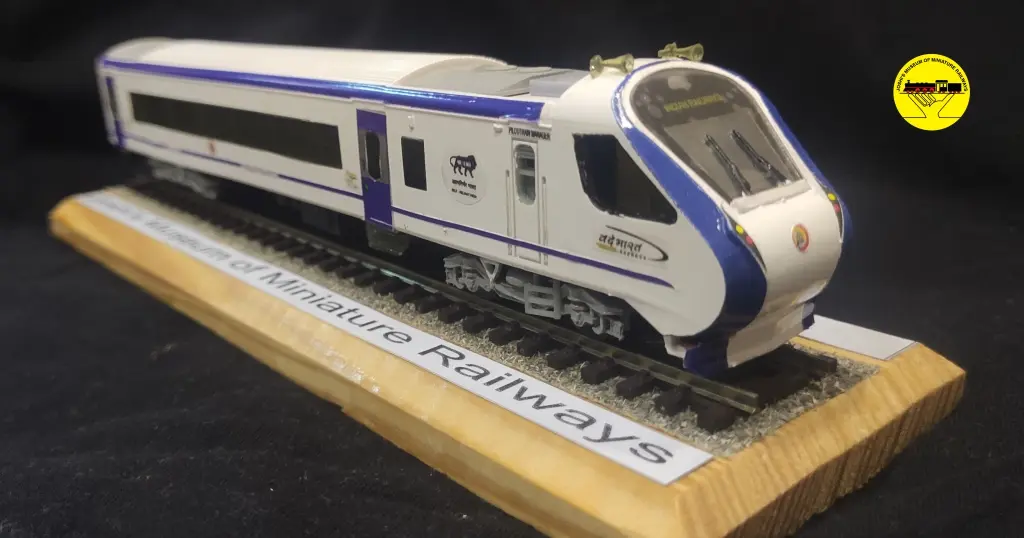
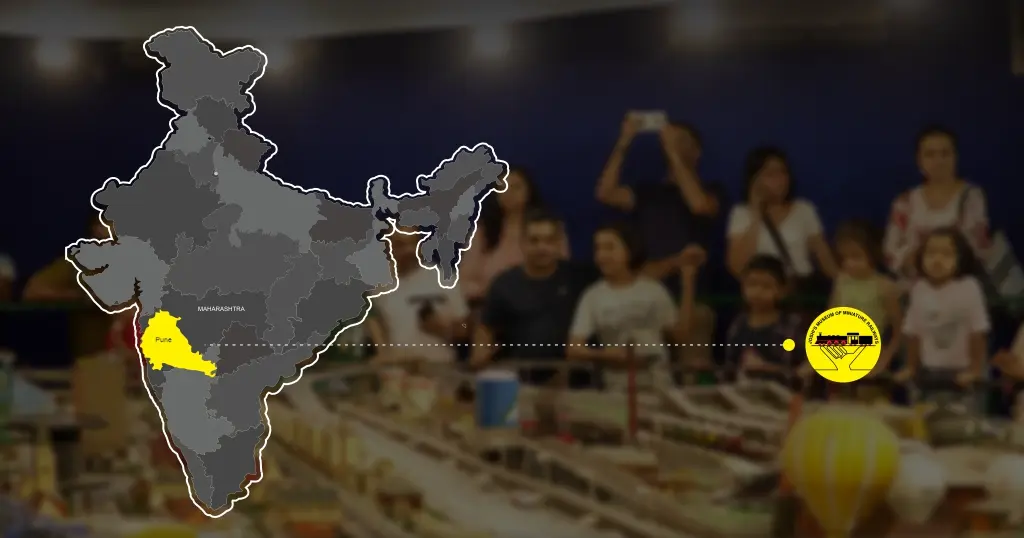
At Joshi’s Museum of Miniature Railways in Pune, children encounter trains that aren’t just toys but tiny lessons in physics, engineering, and innovation. From the German ICE (InterCity Express) to Railbus, or from a mountain funicular railway to a sleek monorail, each model becomes a metaphor for a bigger idea.
Let’s explore how toy trains can be the perfect classroom on wheels.
1. The Science of Motion
At the heart of every train is movement, and children instinctively want to understand it. When a train rolls across its track, concepts like force, friction, and inertia come alive.
- Newton’s First Law in Action: A stationary toy train will stay put until pushed, teaching the concept of inertia. Likewise, it keeps rolling until friction or an obstacle stops it.
- Acceleration and Speed: Children quickly notice that pushing harder makes the train go faster—a hands-on lesson in Newton’s Second Law.
- Energy Transfer: Whether it’s a battery-powered engine or a hand-pushed wagon, kids see how stored energy converts into kinetic energy.
A study by the Journal of Early Childhood Research (2019) noted that children exposed to hands-on kinetic toys like trains demonstrated 25% higher retention of basic physics terms compared to peers learning only through classroom lectures.
2. Engineering on Display: Tracks, Bridges, and Switches
Toy trains don’t just run—they run on carefully designed tracks. Laying down rails, creating loops, or building bridges introduces children to civil and mechanical engineering in its simplest form.
- Tracks: The predictability of rails helps children grasp concepts of linear motion and stability.
- Bridges: When kids balance a train across a bridge, they indirectly learn about tension, compression, and load distribution.
- Switches: A track switch shows how systems can be designed to control direction—an early introduction to mechanical systems and decision-making pathways.
At Joshi’s museum, miniature bridges and tunnels show real-world engineering marvels. The funicular railway, which uses counterbalanced cars to climb steep hills, demonstrates how engineers solve the challenge of gravity.
3. Mathematics in Motion
Trains are a natural gateway to mathematics because they are based on numbers, timing, and geometry.
- Counting and Sequences: Counting carriages builds basic numeracy.
- Measurement: Children estimate distance (“How many tracks long is the train?”) and time (“How long until it comes back?”).
- Patterns: Repeated movement around loops introduces cyclical patterns—a foundation for algebra and geometry.
- Ratios and Speed: Even older children can calculate average speed by measuring track length and timing laps.
In fact, a National Science Teachers Association report highlighted that mathematics retention improves by 32% when abstract concepts are tied to concrete, moving models like toy trains.
4. Technology and Innovation: From Railbus to ICE
Model trains aren’t just historical curiosities—they are windows into how technology evolves. Each miniature at Joshi’s Museum represents a milestone in design and science.
- ICE (InterCity Express): This German high-speed marvel symbolizes aerodynamics and efficiency. Its sleek body introduces children to the concept of reducing air resistance for faster travel.
- Railbus: A lightweight vehicle used on rural tracks, the railbus demonstrates how design adapts to context—small towns didn’t need massive locomotives, so engineers created a leaner option.
- Funicular Railway: A perfect metaphor for applied physics, it teaches about gravity, counterweights, and energy conservation.
By presenting these models, museums like Joshi’s weave stories of innovation: how engineers thought, adapted, and invented to solve problems.
5. The Role of Imagination in STEM
While trains teach physics and math, they also spark imagination—a critical skill in problem-solving.
A child might imagine a train that flies, dives underwater, or runs without tracks. While whimsical, these ideas are the seeds of innovation. After all, concepts like magnetic levitation or hyperloop travel once sounded like fantasy.
Studies in Developmental Psychology suggest that pretend play with structured toys (like trains) boosts divergent thinking scores by 20%, making children better at imagining multiple solutions to a problem.
6. Museums as Learning Classrooms
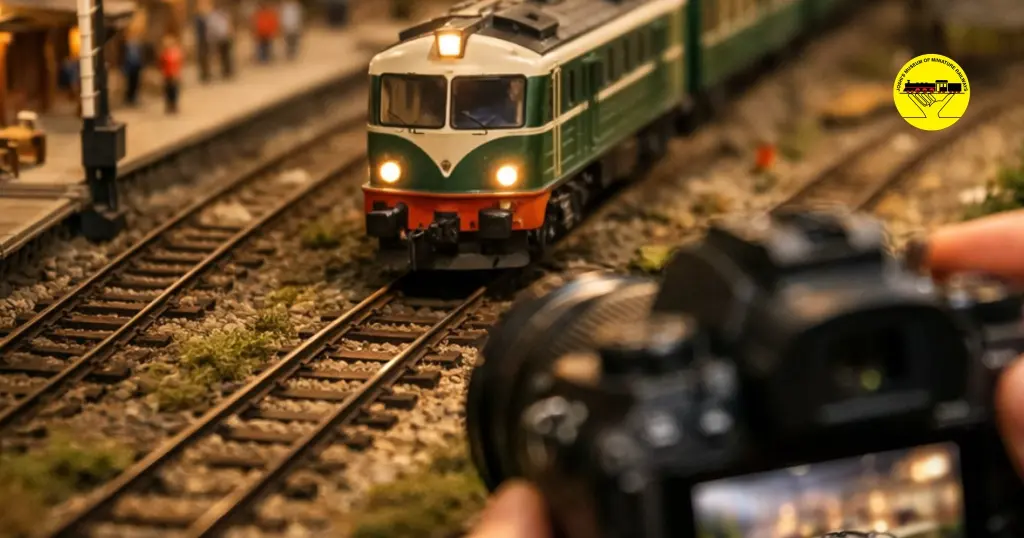
Museums play a vital role in connecting play with deeper STEM understanding. Unlike a toy at home, a miniature railway museum presents context, history, and scale.
At Joshi’s Museum:
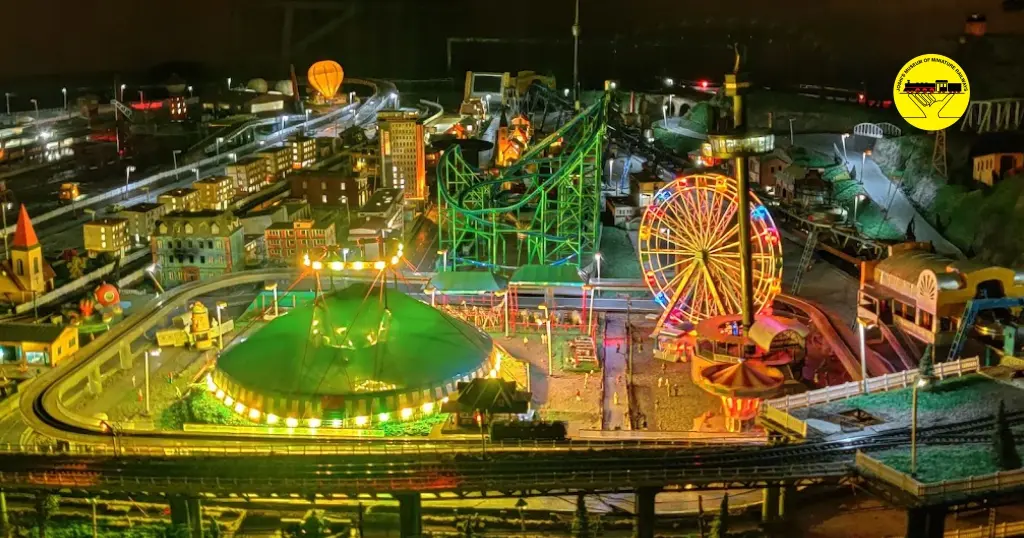
- Children watch 65+ moving trains across mountains, bridges, and cities—seeing systems interact, not just single objects.
- The narration explains how real-world trains evolved from steam to high-speed, connecting play to history.
- Group visits encourage discussion and collaborative problem-solving, which psychologists identify as a cornerstone of STEM readiness.
Museums also bring in the awe factor. Research from the Journal of Environmental Psychology (2020) found that awe-inspiring museum exhibits increase children’s willingness to explore new scientific topics by 42%.
7. Lessons Hidden in Miniatures
Each miniature at Joshi’s is more than a replica—it’s a teaching metaphor:
- ICE: Teaches about aerodynamics and how speed depends on design.
- Railbus: Highlights sustainability and resource efficiency—big ideas in today’s world.
- Funicular: Demonstrates how gravity can be harnessed, not just resisted.
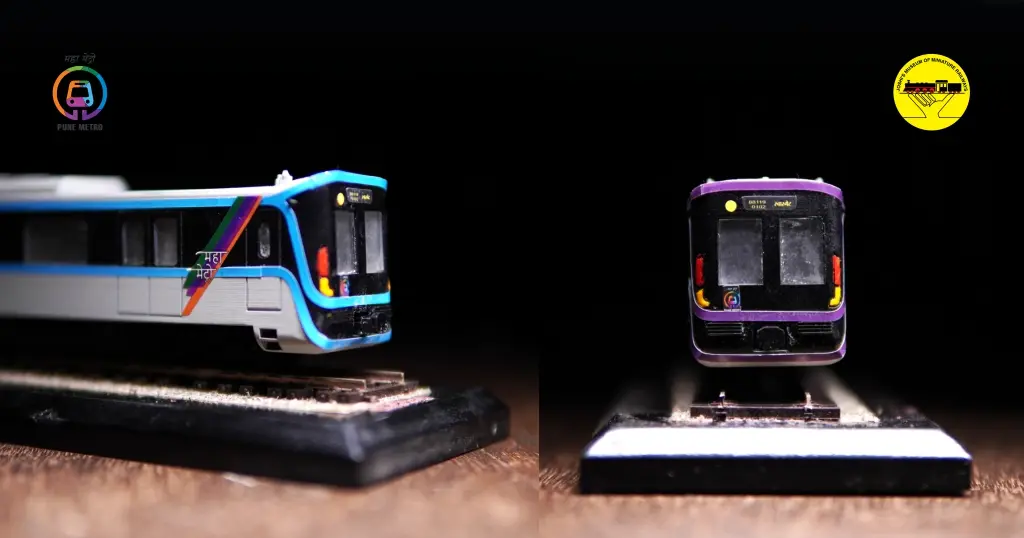
- Monorail: Shows innovation in urban transport and problem-solving with limited space.
By framing these as metaphors, parents and educators can guide children to think bigger: What other systems in life can be simplified like a railbus? How else do we balance forces like in a funicular?
8. Emotional Engagement: Why Trains Work So Well
Why do trains, more than other toys, create this rich STEM environment? The answer lies in their combination of predictability and complexity.
- They are predictable enough for children to understand (train goes forward, stays on track).
- Yet they are complex enough to layer advanced concepts (switching, power systems, aerodynamics).
This balance creates what psychologists call the “zone of proximal development”—where a child can do some things independently and learn more with guidance.
9. From Play to Passion
For many, a childhood fascination with toy trains grows into careers in engineering, design, or science. The tactile memory of tracks and locomotives lays the foundation for curiosity about bigger machines, systems, and technologies.
Even today, railway modeling clubs and STEM education programs use trains to introduce children to robotics, coding (with smart train sets), and mechanical design.
10. Tips for Parents and Educators
Want to use toy trains as STEM teaching tools? Here’s how:
- Encourage questions: When a child asks “why,” let them experiment before you explain.
- Introduce challenges: Ask them to build a bridge the train can cross or design a new track layout.
- Connect to real trains: After play, show pictures of ICEs, monorails, or Indian Railways to link miniature to reality.
- Visit museums together: Experiences like Joshi’s add scale, history, and community to the learning.
- Make it intergenerational: Grandparents often bring stories that enrich the science with nostalgia.
Final Thoughts
Toy trains may look small, but the concepts they carry are enormous. From Newton’s laws to civil engineering, from sustainability to futuristic design, they introduce children to the language of STEM in the most natural way—through play and wonder.
At Joshi’s Museum of Miniature Railways, these ideas are magnified. The ICE, the Railbus, the funicular, and the monorail are not just miniatures; they are metaphors for curiosity, problem-solving, and innovation. Each track laid, each engine moving, is a reminder that the biggest journeys in science often begin with the smallest sparks of imagination.
So the next time you hand a child a toy train—or walk them through a hall of miniature locomotives—remember: you’re not just entertaining them. You’re laying down the tracks for a future engineer, scientist, or dreamer. And that’s the real power of STEM on rails.